Ceremonial Foreign Policy
In shallowly engaging with Kinshasa and Kigali, Washington does little to promote peace and risks insulating leaders from accountability.
By experts and staff
- Published
Experts
![]() By Michelle GavinRalph Bunche Senior Fellow for Africa Policy Studies
By Michelle GavinRalph Bunche Senior Fellow for Africa Policy Studies

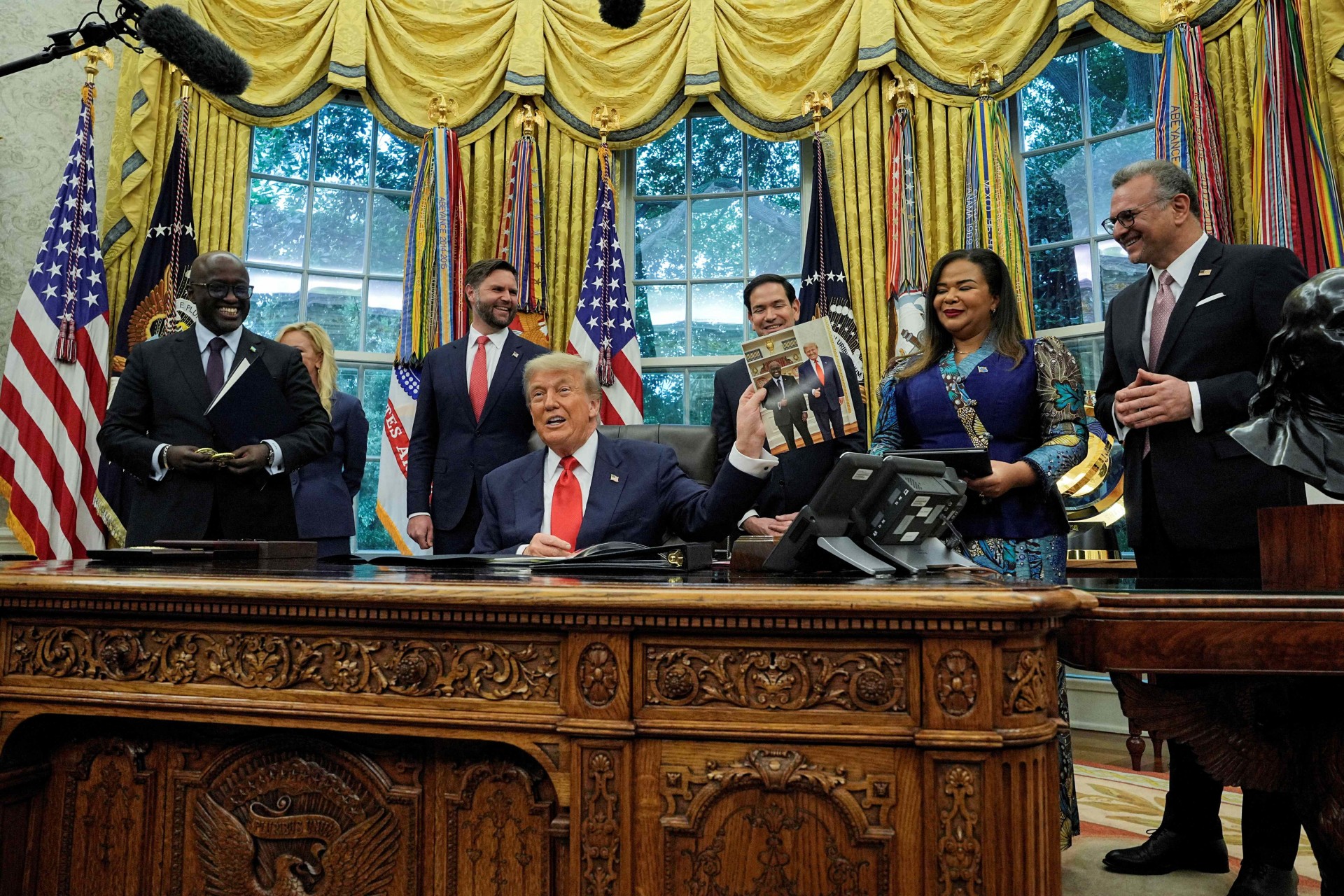
President of the Democratic Republic of Congo Felix Tshisekedi and President of Rwanda Paul Kagame are due to sign a peace deal in Washington on December 4. The Trump administration is characterizing the signing as a historic diplomatic triumph. Unfortunately, it appears to be a triumph of wishful thinking.
The United States’ interest in Central Africa (and the region’s wealth of critical minerals) has prompted a laudable focus on the region’s chronic insecurity, and a series of meetings and agreements in recent months. Washington has focused on talks between the governments of Rwanda and the DRC, shepherding the signing of a Declaration of Principles in April, a “Peace Agreement” in June, and a Regional Economic Integration Framework in November. Qatar, acting as a peacemaking partner to the United States, hosted Congolese leaders and leaders of the M23 rebel movement that is backed by Rwanda for the signing of their own Declaration of Principles in July and “framework” for peace in November.
But very little has changed as a result of these many agreements, raising real questions about what will be different after December 4. On the ground, violence persists, and civilians continue to suffer as both sides commit atrocities. The M23 and allied forces continue to clash with the Congolese security services and their supporters. A significant amount of eastern Congolese territory remains controlled and administered by the M23. Rwandan forces remain in Congo. The drivers of the conflict—Rwandan economic interests and concerns about insurgents with links to the genocidaires of 1994, the absence of legitimate and capable state authorities, land and resource disputes, and communal conflicts—remain unaltered.
Moreover, in both the DRC and Rwanda, the rhetorical temperature is rising. Rather than building hard-won trust, the series of signing ceremonies have only served to deepen suspicion, as conflicting interpretations of the deals, disputes over sequencing, and outright violations have soured the atmosphere. President Tshisekedi has rebuffed calls for a national dialogue to address the country’s governance crisis and continues to whip up anti-Rwandan sentiment to buttress his own politically vulnerable position. President Kagame has expressed skepticism regarding Kinshasa’s commitment. The Congolese security forces and the M23 have accused each other of cease fire violations in just the past few days. The atmospherics in the region do not suggest that a new dawn is near.
Finally, the Trump administration’s radical oversimplification of the crisis in eastern Congo sets the stage for disappointment. There are scores of armed groups operating in the region, including forces from other neighboring states, who have their own security and economic agendas.
By giving leaders iterative opportunities to sign agreements that have meant little in practice, Washington and Qatar risk divorcing those leaders from any real accountability. Their participation in these diplomatic charades helps them evade criticism and pressure even as massacres, mass sexual violence, smuggling, corruption, and humanitarian crisis persist. The United States’ hunger for a peace deal needs to evolve into hunger for actual peace.